

Free AI App Builders: What You Get and What You Don't
An overview of free AI app builders, what's actually included, and where the free tiers usually fall short.
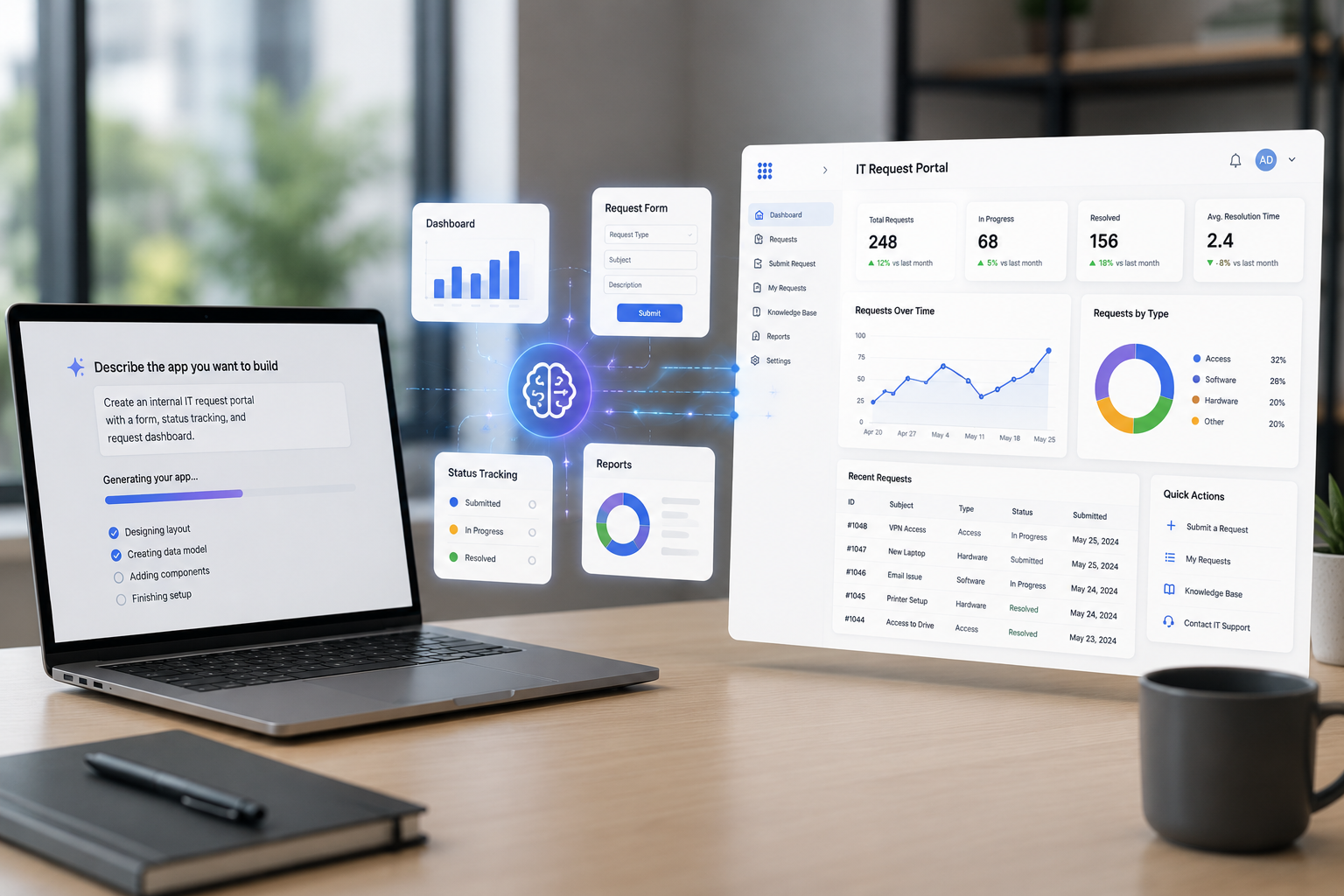
Most AI app builders offer some version of a free plan. Some are genuinely useful for getting started. Others are marketing-layer access designed to give a taste of the product without enough functionality to build something real. This guide breaks down what free tiers on popular AI app builders actually include in 2026, what the real limits are, and how to evaluate whether a free plan is enough for the use case at hand.
Why Free AI App Builders Have Limits
Building and hosting applications costs money. Every time someone uses a free tier to generate an app, run a workflow, or host a published portal, the platform pays for compute, storage, and bandwidth. Free plans are structured to limit this cost while giving enough functionality for users to see the product's value and convert to a paid plan.
The limits tend to fall into a few categories: the number of apps or projects that can be created, the number of users who can access those apps, the amount of data that can be stored or processed, and the number of AI prompts or "credits" that can be used per month.
Understanding which limits matter for a specific use case is the most useful thing to do before choosing a platform based on price alone.
What Free Tiers Typically Include Across Major Platforms
Bubble
Bubble's free plan allows a single app to be built and published on a Bubble subdomain. The application runs on shared resources, which means performance can vary. There are limits on Workload Units, the metric Bubble uses to measure server-side activity, which can result in workflows slowing down or being throttled on a free plan with higher usage. The free plan is functional enough to explore the platform and build a prototype, but most teams doing anything beyond basic testing find they need a paid plan fairly quickly.
Glide
Glide's free plan is aimed at individual users and allows a limited number of rows of data, a small number of updates (edits made through the app back to the underlying spreadsheet), and Glide's own branding on the published app. The row and update limits are the most significant constraints. Free plan row limits are low enough that any active business use case is likely to hit them, and update limits on free plans are especially restrictive.
Softr
Softr offers a free plan that supports one application and a limited number of users (typically up to 5 logged in users, with varying numbers of records depending on the data source). The free plan is useful for testing the platform's features, building a prototype, or running a very small internal tool. Softr's AI features are partially or fully restricted on the free plan.
Lovable and Bolt.new (Frontend Generators)
Platforms like Lovable and Bolt.new use credit-based systems. The free tier provides a limited number of prompts or credits per month. On Lovable, the paid plan at $25 per month includes approximately 100 credits, which translates to roughly 20 to 30 meaningful prompts on a real project before credits run out. Free tiers typically provide fewer credits than a single productive session on a complex app. These platforms are better evaluated through a free trial of a paid plan than through a free tier.
Retool
Retool's free plan supports up to 5 users and includes access to most of the platform's core features. The free plan is one of the more generous in the internal tool builder category, making it a reasonable option for small developer-led teams building admin tools. Retool's free plan does not include features like SSO, audit logs, or custom branding, and some advanced enterprise features require a Business or higher plan.
Appsmith
Appsmith is an open source internal tool builder that can be self-hosted for free. The self-hosted version gives full access to the platform's features without user limits, though hosting and infrastructure costs apply. There is also a cloud version with a free tier that supports a limited number of users and applications.
The Limits That Matter Most
Across all platforms, a few limits tend to have the most practical impact:
- Published portal or application limits. Some free plans allow only one published app. For teams needing multiple portals or dashboards, this is a significant constraint.
- User limits. Many free plans cap the number of people who can access the published app at 5 or fewer users. For anything shared with a team, this ceiling is quickly reached.
- Data row or record limits. Platforms connected to data sources often limit how many records can be displayed or processed on a free plan. A tracker with a few hundred rows can hit this limit faster than expected.
- Branding. Most free plans include platform branding on the published app ("Built with [Platform Name]"). For internal use, this may not matter. For anything shared with external users or clients, it can be a factor.
- AI credit or prompt limits. On AI-generation focused platforms, free tiers often provide very few credits, sometimes enough for one or two meaningful builds per month.
How to Evaluate a Free Plan Before Committing
Before choosing a platform based on a free tier, a few questions are worth answering:
- How many people need to access the published app? If more than 5, check the user limit on the free plan before investing time in building.
- How much data will the app display or process? If the use case involves hundreds or thousands of records, check the row or record limits.
- Will the app need to connect to more than one data source? Some free plans limit the number of data connections.
- Does the platform branding matter? If the app will be shared with clients or external stakeholders, branded free plans may not be appropriate.
- Is the free plan enough to actually test the thing being built, or is it just enough to see the interface? Some free plans are genuinely functional for prototyping. Others are access to a demo experience rather than a real build.
For more context on the category, see AI App Builders and No Code Platforms: A Complete Guide.
Frequently Asked Questions
Related Topics
Build Your Internal Tools With Huddle
Huddle is a zero code application builder that connects to Google Sheets, Airtable, Excel 365, HubSpot, and Salesforce without requiring data migration. Build dashboards, forms, and portals with drag and drop widgets and publish to a shareable link in minutes.
Start building with Huddle