

ITSM Software: What SMBs Actually Need vs Enterprise Tools
What SMBs actually need from ITSM software, and how it differs from the enterprise tools designed for large IT teams.
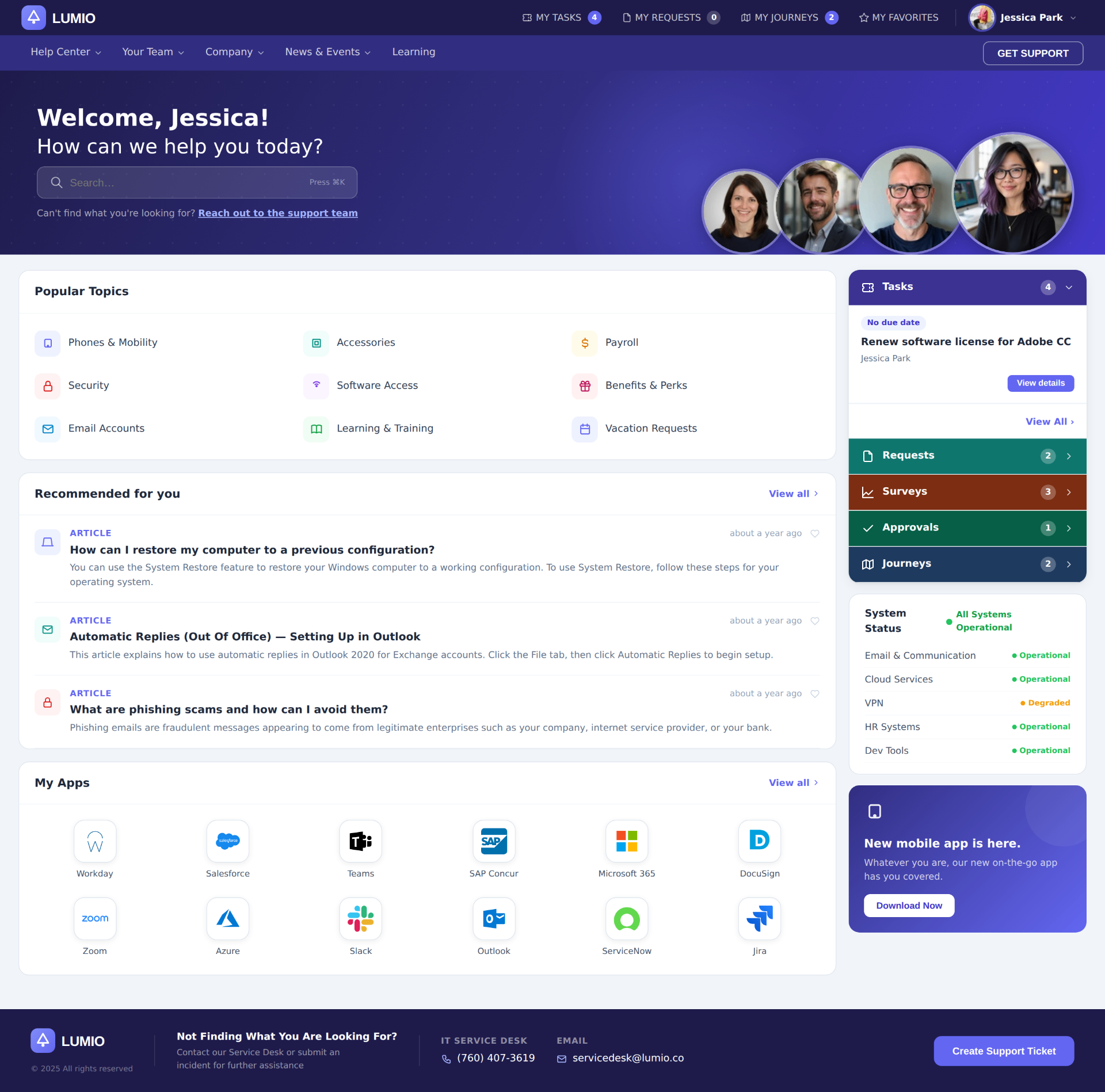
IT service management (ITSM) software covers a broad category. On one end is ServiceNow, a platform designed for large enterprises with dedicated IT operations teams, complex multi department workflows, and budgets that can absorb six figure annual software costs. On the other end are basic ticketing tools that barely do more than an email inbox. Most small and mid sized businesses need something in between, and identifying which capabilities actually matter for their size is the most useful thing to do before choosing a platform. This guide covers what ITSM looks like at the SMB level, which features matter and which are enterprise only overhead, and which platforms are worth evaluating.
What ITSM Software Actually Does
ITSM software manages the relationship between an IT team and the rest of the organization. At its core, this means:
Ticket management. A structured way for employees to submit IT issues or requests, and for the IT team to track, prioritize, and resolve them.
Service catalog. A menu of standard IT services employees can request (new laptop, software license, password reset, VPN access) with a defined process for each.
Asset management. A record of the hardware and software the company owns, what it's assigned to, and its status.
Knowledge base. A library of self service articles and how to guides that help employees resolve common issues without submitting a ticket.
Change management. A process for tracking, approving, and documenting changes to IT infrastructure to reduce the risk of outages.
Reporting and SLA tracking. Metrics on ticket volume, response times, resolution times, and whether the IT team is meeting its service level commitments.
Enterprise ITSM platforms like ServiceNow extend far beyond this list into ITOM (operations management), HRSD (HR service delivery), customer service management, field service, and more. Most SMBs don't need that breadth.
What SMBs Actually Use From ITSM Software
A 50 to 500 person company's IT team typically needs a working subset of the full ITSM feature list. Based on how SMB IT teams typically operate, the features that get used daily are:
Ticket intake and tracking. This is the core. Employees need a way to submit requests that is easier than emailing the IT team directly and gives them visibility into what happened to their request. This is the single most universal ITSM need across businesses of every size.
Service catalog. A list of standard requests with defined intake forms makes the IT team's work more predictable and reduces back and forth clarification. This feature is valuable from day one for any team handling a meaningful volume of repeat request types.
Basic asset inventory. Knowing what hardware and software the company has, who it's assigned to, and what needs renewal is important for any IT team managing more than a handful of devices.
Knowledge base. Self service articles for common questions (how to connect to VPN, how to reset a password, what to do when a laptop won't connect to Wi-Fi) reduce ticket volume and free up IT time.
The features that SMBs commonly pay for but rarely use:
Change management at enterprise scale. The full ITIL change management process (change advisory boards, formal approval chains, risk assessments) is built for organizations making frequent infrastructure changes with real downtime risk. Small IT teams making occasional changes usually handle this informally.
CMDB (Configuration Management Database). A full CMDB tracks every IT asset and its relationships to other assets and services. This is powerful but complex to maintain and primarily valuable for large, complex IT environments.
Advanced ITOM features. Network monitoring, cloud operations management, and automated discovery tools are enterprise infrastructure management features that most SMBs don't have the environment to justify.
ITSM Platforms Worth Evaluating for SMBs
Freshservice
Freshservice is the most commonly recommended ITSM platform for SMBs. It covers ticket management, service catalog, asset management, change management, and a knowledge base, with pricing that starts at around $19 per agent per month (Growth tier). It is designed to be set up and administered without a dedicated ITSM specialist and typically deploys in days rather than weeks.
Freshservice covers the core feature set most SMBs actually use, without requiring the full ITIL level implementation overhead of enterprise tools.
Jira Service Management
Jira Service Management (JSM) is Atlassian's ITSM product. It is a strong choice for teams already using Jira Software or Confluence, since the products share authentication, data, and linking between development issues and IT requests. JSM is free for up to 3 agents and uses transparent per agent pricing above that.
JSM's interface is more developer oriented than Freshservice, which can create a learning curve for IT teams that don't come from a software development background.
SysAid
SysAid is an ITSM platform that includes a self service portal, ticket management, asset management, change management, and reporting. It is positioned for mid market organizations and SMBs that need more depth than a basic helpdesk tool but don't need ServiceNow's full enterprise footprint.
SysAid's self service portal is one of its highlighted features, providing a configurable employee facing portal for submitting and tracking IT requests. Pricing is not published publicly and requires a quote, which puts it in a different evaluation category from the transparent pricing platforms.
Zoho Desk
Zoho Desk is primarily a customer service helpdesk tool that is also used by IT teams for internal ticketing. It covers ticket management, a knowledge base, and basic reporting. It does not have the dedicated ITSM features (change management, CMDB, asset management) of Freshservice or JSM, making it more suitable for teams whose primary need is simple IT ticketing rather than a full ITSM practice.
Pricing starts at $14 per agent per month, making it one of the most affordable options in the category.
Spiceworks
Spiceworks is a free, ad supported IT helpdesk and network monitoring tool. It covers basic ticketing, user management, asset inventory, and a user portal. It is widely used by very small IT teams (one to three people) that need basic ITSM functionality without a budget for software.
The trade off is the ad supported model and a less polished interface than paid alternatives.
A No Code Self Service Portal
For SMBs whose primary ITSM need is a clean employee facing portal for submitting IT requests and tracking status, rather than a full ITSM platform with backend workflow management, a no code portal builder connected to existing data sources can cover the core use case without the cost or complexity of a dedicated ITSM tool.
This approach builds a service catalog and request form on top of whatever data the IT team already manages in a spreadsheet or simple tracker, publishes it to a link employees can access from any device, and gives the IT team a structured intake without requiring them to maintain a dedicated ITSM platform.
See Employee Self Service Portals: What They Are and How to Build One for more on this approach, and No Code and Enterprise Software Alternatives: A Buyer's Guide for a broader look at alternatives to enterprise platforms.
How to Choose the Right ITSM Tool for an SMB
A straightforward decision framework for teams evaluating ITSM software:
If the primary need is IT ticketing and a self service portal, and the team is under 10 agents: Start with Freshservice's Growth tier or Jira Service Management's free tier. Both cover the core need at low cost.
If the team is already on Atlassian products (Jira, Confluence): Jira Service Management is the obvious choice. Adding a separate ITSM platform when JSM is already available in the Atlassian subscription is unnecessary overhead.
If the primary need is a clean employee portal for submitting requests, and full ITSM workflow management is not needed: A no code portal builder is a faster, more affordable path than buying a dedicated ITSM platform.
If the team needs asset management, change management, and reporting in addition to ticketing: Freshservice or SysAid cover this at SMB appropriate pricing and complexity. ServiceNow is not necessary for this use case at SMB scale.
If budget is the primary constraint: Spiceworks is free and covers basic ticketing and asset inventory. It is not a long term solution for a growing IT team but is a reasonable starting point.
The ServiceNow Question for SMBs
ServiceNow comes up in every ITSM evaluation because it is the market leader. For SMBs, the honest answer is that it is almost never the right choice.
ServiceNow's pricing (estimated at $100 to $200 per agent per month at the ITSM tier), implementation timeline (typically 12 to 16 weeks with a certified partner), and ongoing administration requirements (a dedicated ServiceNow admin) are built for organizations that need enterprise scale ITSM across multiple departments, geographies, and complex IT environments.
A 50 person company paying ServiceNow's estimated minimum for 10 agents would spend roughly $12,000 to $24,000 per year in licensing alone, before a $50,000 or more implementation project and the cost of ongoing administration. Freshservice covering the same 10 agents costs roughly $2,280 per year, deploys in days, and requires no dedicated admin.
The capability difference between the two platforms is real, but for most SMBs, that capability gap is in the features they do not use.
Frequently Asked Questions
Related Topics
Build Your Internal Tools With Huddle
Huddle is a zero code application builder that connects to Google Sheets, Airtable, Excel 365, HubSpot, and Salesforce without requiring data migration. Build dashboards, forms, and portals with drag and drop widgets and publish to a shareable link in minutes.
Start building with Huddle